OUR STORY — THE LAND
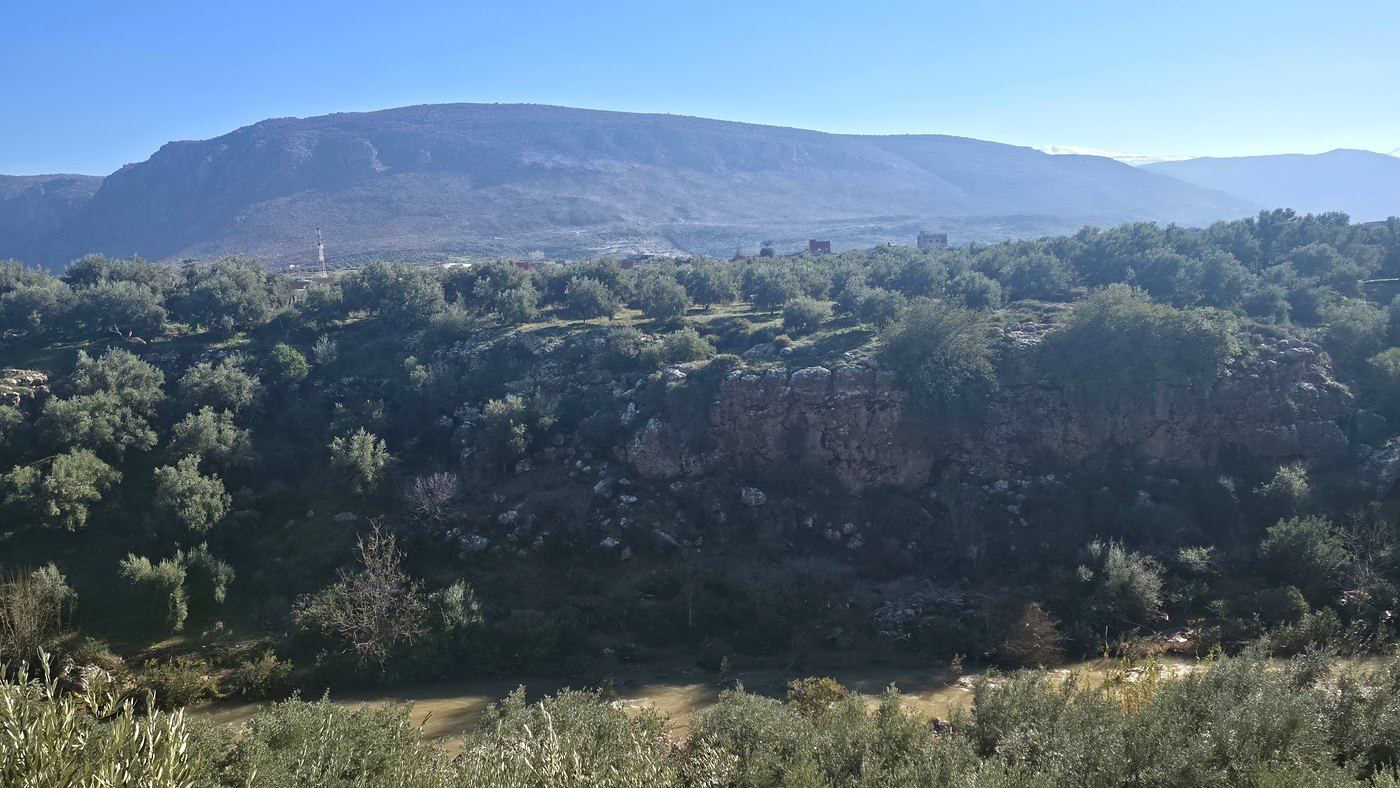
Tagzirt, at the foot of the Atlas.
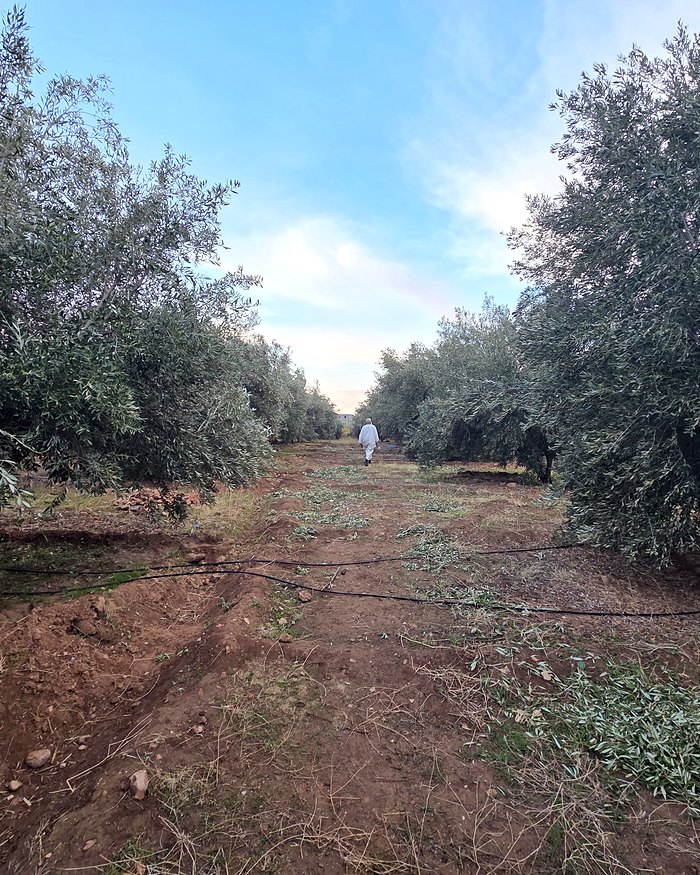
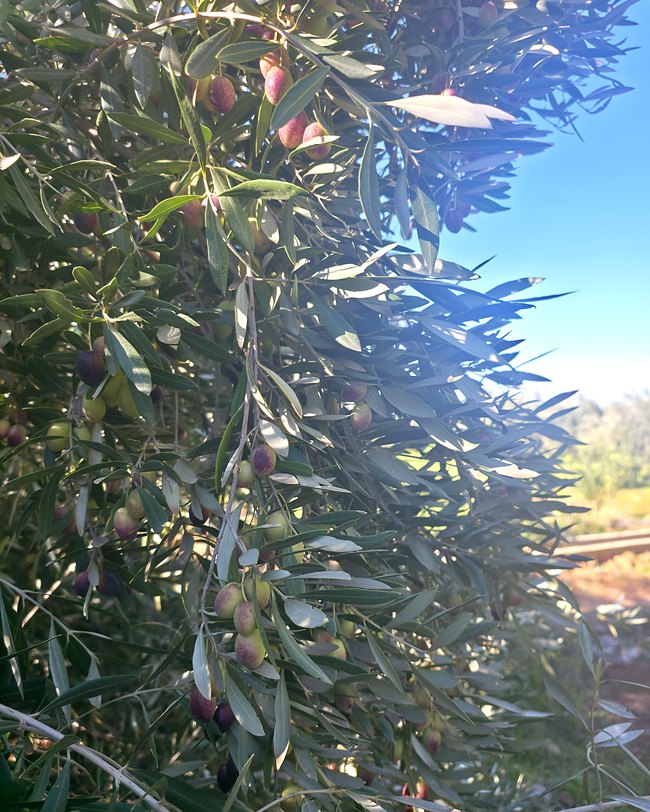
At 600 metres, 660 Picholine Marocaine olive trees in a single grove: one variety, one origin, one harvest.
Six hundred metres up, on the lower slopes of the High Atlas. The altitude does work we could never do ourselves: nights are markedly cooler than days, ripening slows, and the fruit has time to build its aromas. It is an agronomic constraint — a later harvest, lower yields — and it is what gives the oil its structure.
The grove is irrigated with water from the High Atlas: the river and the well on its bank draw on the same mountain aquifer.
That mountain water irrigates the grove all year round. One variety, one grove: the Picholine Marocaine here is never blended or topped up with olives bought elsewhere.
THE MEMORY OF THE LAND
Ancient land, trees in their prime.
The plain of Tagzirt and the first slopes of the High Atlas have carried olive trees for centuries. Our 660 trees are around thirty years old — the age at which an olive tree gives its best. We won't sell you a story about thousand-year-old trees; we offer what land that has always grown olives gives to trees in full vigour.
TIWIZI
Mutual help before machines.
Amazigh means “free people”. Tiwizi is their word for mutual help: at harvest time, neighbours lend a hand from plot to plot and return what they received. For us it is not folklore. It is how we organise the work — declared and paid — and the reason we pick by hand rather than by machine.
In practice: many hands share the harvest, the work is declared and paid, and nobody beats the branches to bring the fruit down. It is slower than a mechanical shaker, and that is the point — a beaten tree bears less the following year.
Out of respect for everyone involved, we don't publish portraits: we show the work.
The Amazigh world →- Locality
- Tagzirt
- Region
- Béni Mellal-Khénifra
- Altitude
- ≈ 600 m
- Coordinates
- 32°26′ N, 6°11′ W